The Alcohol Lie: Why Moderation May Be Failing Men Over 50
For thirty years I believed a glass of red wine at dinner was doing my heart a favor.
Not hoped. Believed. It was settled science as far as I was concerned, and it was extremely convenient science, because it meant the thing I already wanted to do was also the healthy thing to do.
Then I went looking for the actual studies behind alcohol and health after 50, and the whole thing came apart in my hands.
Not because someone moralized at me. Because the research I had been leaning on had a hole in it big enough to drive a truck through.
Here is how the myth got built, the flaw that broke it, and where I landed.
Table of Contents
Where “wine is heart-healthy” actually came from
It started with something called the French Paradox — the observation that the French ate rich food, drank wine, and still had relatively low rates of heart disease. Red wine got the credit. Resveratrol got a publicist. The idea went everywhere.
What cemented it was the J-shaped curve. Plot health outcomes against how much people drink and you got a curve where moderate drinkers appeared to do better than people who did not drink at all. By the 1990s that curve was gospel. It was on the news, in magazines, and eventually in my head.
I never questioned it once. Why would I? It told me exactly what I wanted to hear.
Abstainer bias: the flaw that broke the studies
Here is the part nobody mentioned at dinner parties.
Those studies compared moderate drinkers to “non-drinkers.” But who ends up in a non-drinker group in middle age? Plenty of people who are perfectly healthy — and also people who stopped drinking because they were already sick. People whose doctor told them to quit. People on medication that does not mix with alcohol. People in recovery.
Researchers call it abstainer bias, and it stacks the comparison group with people who are unwell for reasons that have nothing to do with the wine.
So the moderate drinkers were not beating healthy non-drinkers. They were beating a group that was already in trouble. The magic curve was partly a measurement artifact.
When better-designed studies separated lifelong non-drinkers from former drinkers — and when genetic studies looked at people whose bodies process alcohol differently, sidestepping the lifestyle confounding entirely — the apparent benefit shrank dramatically or disappeared.
What the major health bodies say now
Two things happened recently that made this impossible for me to keep ignoring.
In 2023, the World Health Organization stated that no level of alcohol consumption is safe for health. Not “keep it low.” No safe level. Alcohol is classified as a Group 1 carcinogen — the same category as tobacco and asbestos — which is a statement about strength of evidence, not about equal risk at any dose.
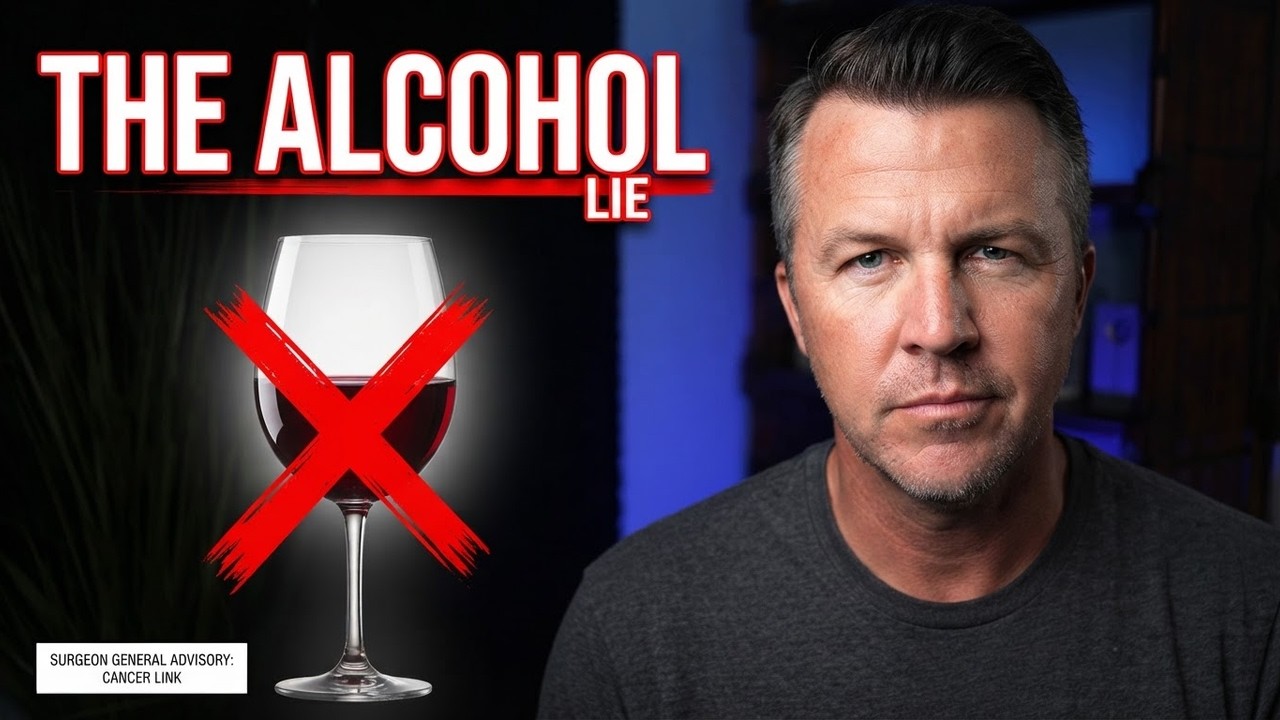
In January 2025, the U.S. Surgeon General issued an advisory linking alcohol to at least seven cancers: breast (in women), colorectum, esophagus, liver, mouth, throat, and voice box. The advisory called for updating warning labels and put the U.S. numbers at roughly 100,000 alcohol-attributable cancer cases and about 20,000 cancer deaths a year.
And the line that actually got me: fewer than half of Americans know alcohol increases cancer risk at all. I was in the majority. At 50. After decades of thinking I was reasonably well informed.
Ethanol in your boat vs. ethanol in your body
The thing that finally made it click for me was dropping the word “wine.”
Wine comes with a story — vineyards, dinner, the good life. The molecule does not. The active ingredient in a glass of pinot is ethanol, and it is the same ethanol you would put in a boat motor. Your liver converts it into acetaldehyde, which is the compound that damages DNA.
Once I started thinking about the molecule instead of the marketing, “but it is only a glass of red” stopped sounding like a health argument and started sounding like what it was: a preference. Which is fine. It was just not the same thing as evidence.
Being honest about what is still debated
I am not going to overstate this, because overstating things is how I ended up believing the wine story in the first place.
Researchers still argue about the shape of the curve at genuinely low intake. Nutrition epidemiology is messy, most of this evidence is observational, and risk at one drink a week is not risk at three drinks a night. Anyone telling you the science is 100 percent settled in either direction is selling something.
What has changed is the direction of travel. The confident claim that moderate drinking is protective no longer holds up. The honest version now is: alcohol carries risk, the risk rises with the amount, and there is no dose anyone can promise you is free.
Why my wife quit — and why I finally did
My wife quit first. Cold turkey, no announcement, no lecture aimed at me.
I pushed back anyway. I had a hundred reasons and I used all of them. I felt fine. I was not overdoing it. It was only with dinner. It was good for me, remember?
What eventually moved me was not an argument. It was reading the studies myself and realizing I had built three decades of behavior on a comparison group that was quietly broken. Nobody lied to me. I just never checked.
So I stopped. Not because someone told me to. Because I ran out of honest reasons not to.
And to be clear: this is your call, not mine. You are an adult and you get to weigh your own risks. All I want is for you to weigh them with the current evidence instead of a 1990s magazine cover.
What alcohol and health after 50 really looks like on a lab report
Cancer risk is the headline. But the reason alcohol and health after 50 deserves its own post is quieter, and it shows up on a lab report long before anything else does.
- Triglycerides. Alcohol is a well-known driver of elevated triglycerides. Mine came back at 277 — and cutting alcohol is one of the first levers anyone pulls on that number.
- Blood pressure. Regular drinking pushes it up, and after 50 that is a number most of us are already fighting.
- Liver markers. ALT, AST and GGT drift in the wrong direction long before anyone uses the word “damage.”
- Sleep. Alcohol makes you fall asleep faster and sleep worse — it fragments the back half of the night, which is where a lot of recovery happens.
That is the honest over-50 case. Forget the cancer statistics for a second: alcohol was quietly making four of my numbers worse, and I had no idea because I had never actually looked at them.
Which is exactly why I stopped guessing and got the full panel. You can see all 129 of my biomarkers, including the triglyceride number, in my Function Health results breakdown.
Stop guessing: get your own numbers
You do not have to take my word for any of this, and you should not. The only way to know what alcohol and health after 50 actually means for you is to look at your own numbers.
1. Learn to read your own bloodwork. I put together a free Biomarker Decoder that explains normal vs. optimal, walks through the heart and metabolic markers that matter, and shows you which two or three numbers to work on first.
Then retest in a few months and see what moved. That is the whole method: measure, change one thing, measure again.
If you want the backstory on why I started questioning any of this, it is in the post about everything I got wrong about health after 50. And subscribe on YouTube so you catch the retest.
It is not too late. It was not too late for me at 50, thirty years into believing the wrong thing.
I am Joe. This is Function Over 50. And we are just getting started.
Sources: U.S. Surgeon General’s Advisory on Alcohol and Cancer Risk (January 2025); World Health Organization statement on alcohol consumption (January 2023); Mendelian randomization studies on alcohol and cardiovascular risk.
I am not a doctor and nothing here is medical advice. This is my own experience and general information only. If you drink heavily, do not stop abruptly without medical guidance — withdrawal can be dangerous. Talk to a qualified physician about your own situation.